
The wonderful 2 Litre Lagonda explained
What is the difference?
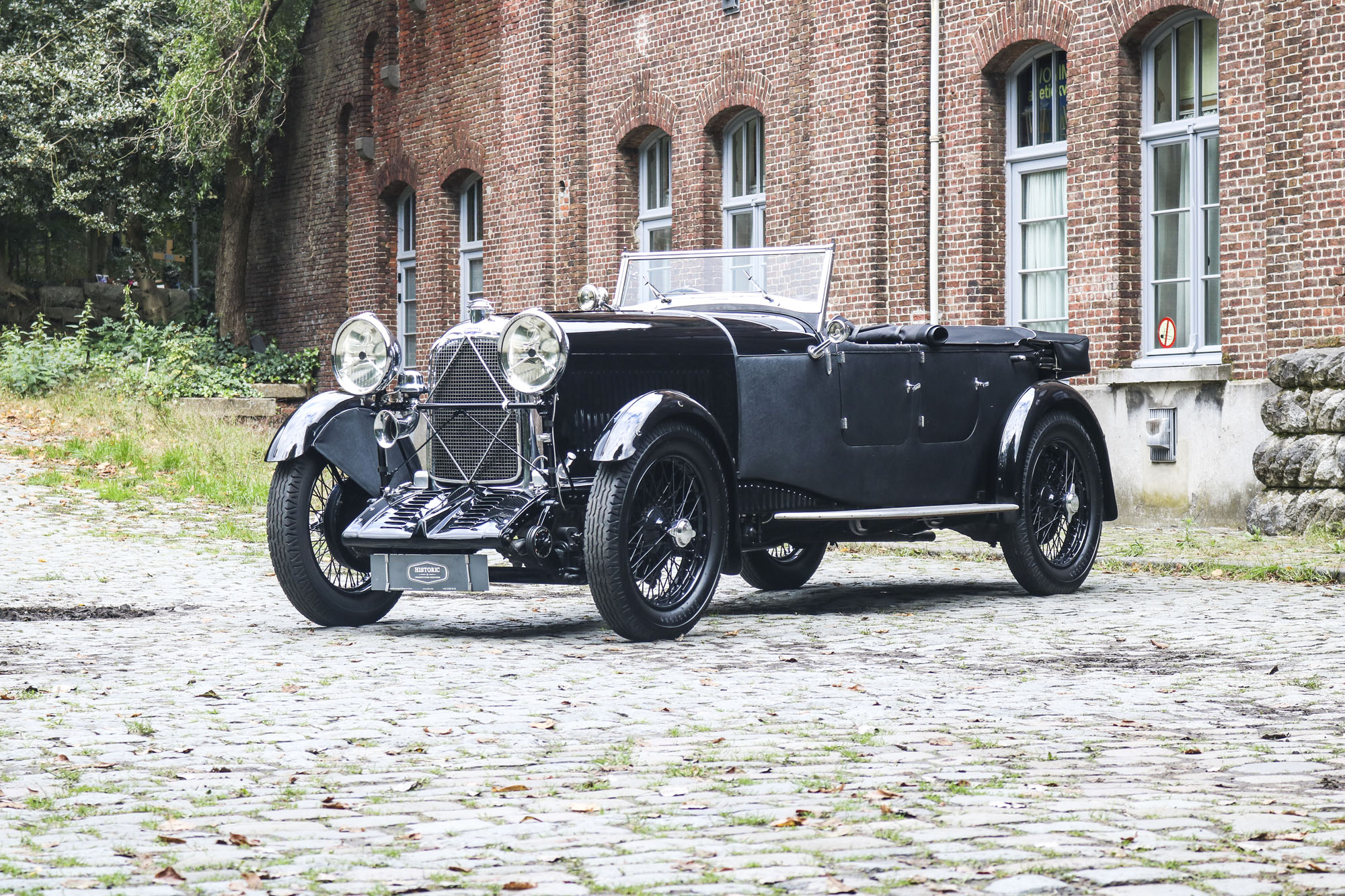
There is a lot of talk about high chassis or low chassis,
"you must have a low chassis"
This is not correct!
The main differences are minimal and non consequential.
• The front brakes on the low chassis have the torque shaft running through the kick-up at each side, this makes little difference if any.• The front brakes on the high chassis have the torque shaft running under the front axle kick-up. • Most high chassis cars have the "light" rear axle, this is not a negative as it is easily strong enough and lighter! Only about 30% of low chassis cars have the heavy axle.• The brakes and fittings on the low chassis axle allows the chassis to sit slightly lower but you can not feel this when driving.• The high chassis cars usually look more vintage as they look a little less sporty, personal preference rather than being better or worse.
As you see, very little advantage or disadvantage for either and although there are other small differences, they are minimal at most.
The most important thing to remember is that a well restored and well prepared 2 Litre Lagonda is an absolute pleasure to own and drive!
Engine specifications:
The engine of the Lagonda 2L has many forms and was changed through the years. There are differences between the standard variations but none that truly matter.
Modifications and qualified engine rebuilds are more important. Follow me.
Lagonda 2litre engine variations:
Early 14/60 and 2 Litre high chassis and some early low chassis cars had the early cylinder block with the exhaust ports all joining partly inside the block and partly in the exhaust manifold. This was not ideal and is the main cause of a dip in power in the mid range. It can be fixed.
Later 2 Litre low chassis cylinder blocks had the three exhaust ports terminating at the face of the block. This is better when making a new exhaust manifold as it also enabled Lagonda to redesign the cast exhaust manifold to slightly improve mid range power, but not by much.
Both types when fitted with a single carburetor in std form give about 50-55bhp. At best.
Twin carburetors, Some cars are equipped with twin carburetors. Early cars have the Zenith triple diffuser type, we call these "triple confuser" as they are not great!
We prefer the SU types as they give a better flow and better fuelling. The power can go up to 60bhp with a twin car std engine and later exhaust type.
Supercharged cars, In std form the superchargers tend to give about 3-4psi boost. This brings the power up to about 70bhp if the engine is in very good condition and well set up. Still not a great power output but at least the mid range was improved again.
Our own development, 2.4 Litre conversion:
This is where the fun starts and the list of possibilities are endless,
After falling in love with one of the 2 litre Lagonda,s that he used to look after, Julian was asked by the owner of that car if a really worth while power increase could be had.
The answer was YES. And the 2.4 upgrade was born 1 year later. But it is not just an over bored 2 Litre!
The 2.4 Litre conversion carries so many advantages it really needs to be made into a list,
1. Around 110 to 120 bhp un-supercharged or 125 to 135 bhp if supercharged, depending on final specification requested by the customer, with much improved power spread.
2. Very strong and flat torque curve,
3. Very easy gear changes compared to standard,
4. Soft and easy clutch pressure but very reliable and able to handle abuse,
5. Stainless steel exhaust manifold and exhaust system,
6. Car starts much easier.
7. Improved reliability due to much stronger internal parts and better balance,
8. No change in external looks other than the exhaust manifold,
9. Better cooling due to improved combustion and cleaned internal block passages,
10. Less oil leaks as we use modern crankshaft oil seals and a modern composite cylinder head gasket,
11. Massive driving enjoyment and the possibility to shame cars with much larger engines.
12. Giving one of the most delightful pre-war driving experiences possible.
Details that do matter!
Fully balanced Steel Crankshaft
The best of the best !


Modern oil pump internals
The standard pump is a poorly designed unit that has numerous problems and inefficiencies, We modify the original housing and use a modern design with new gear internals, better reliability, better oil pressure and no vibrations.Modern Design Camshafts
Due to 100 years of better understanding of the internal combustion engine and the way inlet and exhaust pulses help to carry the charge in and out of the engine it has been possible to develop special camshafts specifically designed for this engine, Without sacrificing low down power and in fact we have increased power considerably from idle through to maximum revs with absolutely no disadvantages.These camshafts are an HCS only design.


Steel Billet Connecting Rods
Modern designed connecting rods, The standard rods are extremely narrow and weak, With improved power we like to add improved reliability and dependability, Stronger rods, new designed Crank, better balance, better reliability.Gain Gain
Modern Composite Steel / Graphite Head Gasket
Standard Copper asbestos type gaskets are never used on modern cars, Why? Because they are not reliable, Modern technology and material understanding means we can improve reliability here also,

Forged Aluminium Pistons
Top quality internals and nothing but the best.Lighter, Stronger, better Tolerances, less Expansion means we can get a better seal meaning more power going to the flywheel
Oil seals
We fit a modern split type oil seal to the rear main bearing to put an end to leaks on the garage floor.

Clutch
We fit a new steel lighter weight flywheel coupled with a modern diaphragm clutch to ease gear changes and improve both reliability and engine response.Dynomometer
"Plug and Play"


Results
These results speak for themselves,Although this was one of our ultimate spec 2.7 Litre engines it was built for drivability and not ultimate power, these figures are in KW and relate to about 140 BHP with around 220 ft/lb of torque available from 1600 rpm onward.
Need we say more!


More information
Want to know more?
Just simply fill out the form below and we'll contact you directly.